 DealerPrep.ca
OMVIC discipline case ·
OMVIC fines Riverside Chevrolet $6,000 after admin and fuel fees on a Buick Encore and Chevrolet Malibu
OMVIC's Discipline Tribunal fined Riverside Chevrolet Buick GMC $6,000 on April 29, 2026 for hiding admin, fuel and OMVIC fees outside the listed price.
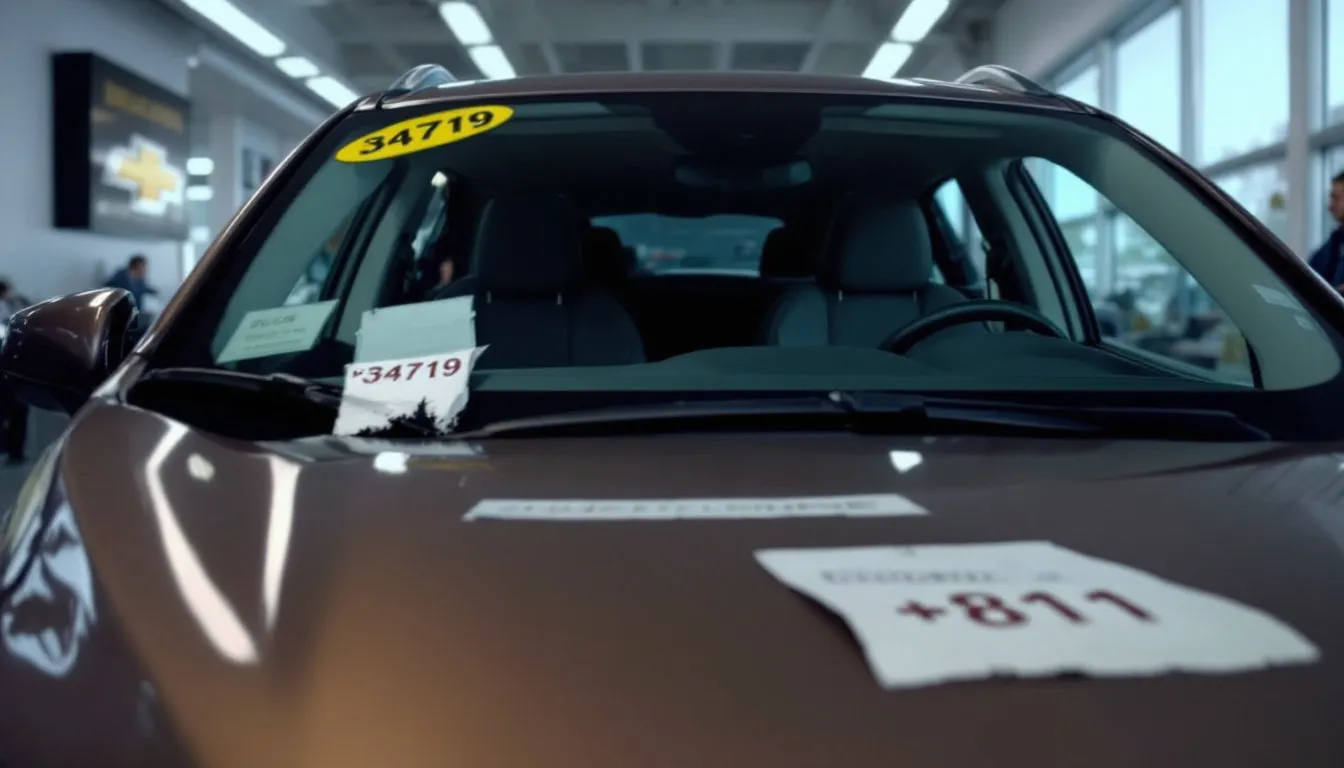
OMVIC’s Discipline Tribunal fined Riverside Chevrolet Buick GMC $6,000 on April 29, 2026 after a July 2024 books and records inspection found two transactions where the contracted selling price exceeded the advertised price. Edwin MacMillan, the dealer’s Director, General Manager, and Person in Charge, was fined $1,000 and must complete OMVIC’s Advertising Compliance Webinar within 90 days. The dealer must offer to fund the MVDA Key Elements Course for every current and future salesperson it employs.
What separates Riverside from the run of recent all-in pricing cases on the site is the prior contact. In May 2022 the Registrar sent the dealership a written warning letter specifically about s. 36 of O. Reg. 333/08, telling staff that “an advertised price must be inclusive of all fees.” Two years later, the inspector walked into the same dealership and found two transactions that broke the same rule. The post-warning history is what put the $6,000 quantum at the upper end of the all-in pricing range that has run through CCC Motors, Hully Gully, Thunder Bay Harley-Davidson, and Gran Turismo.
What the inspection found
On July 25, 2024 an OMVIC inspector attended the dealership and reviewed two recent transactions.
2024 Buick Encore GX (Stock 24-323)
The dealer advertised the new Buick Encore GX at $34,719 plus tax and licensing. On June 10, 2024 the dealer sold the vehicle to a consumer for $35,530.50. The bill of sale broke out three additions, none of which were inside the advertised number:
- $699 administration fee
- $100 fuel fee
- $12.50 OMVIC fee
The arithmetic is exact: $811.50 above the listed price.
2022 Chevrolet Malibu (Stock 24-146A)
The same pattern showed up on a used 2022 Chevrolet Malibu, advertised at $26,995 plus tax and licensing. On June 15, 2024 the dealer sold it for $27,506.50. The bill of sale added:
- $399 administration fee
- $100 fuel fee
- $12.50 OMVIC fee
Again, $511.50 over the advertised price.
Both transactions fail s. 36(7) of O. Reg. 333/08. The rule requires that the advertised price include every fee and every cost of any other goods or services tied to the trade. The only textual exclusion is sales tax under s. 36(10); separately itemised licensing is the one further carve-out OMVIC accepts in practice. Admin, fuel, and the OMVIC trust fee fall on neither side of those exceptions, so they belong inside the advertised number.
The dealer’s s. 4(2) of the Code of Ethics finding follows from the same facts. A registrant who advertises one price and then quotes a different price on the bill of sale is not making a representation that is “legal, decent, ethical and truthful.” s. 9(3) follows in turn, on the registrant’s best-efforts duty to prevent error.
MacMillan’s personal finding
Edwin MacMillan was first registered as a motor vehicle salesperson in October 1983, four decades before the inspection. He acted as Director, General Manager, and Person in Charge throughout the relevant period, and the panel found he actively participated in the dealer’s daily operations. That set up the personal finding under s. 6(2) of the Code of Ethics: a registered salesperson “shall not do or omit to do anything that causes the registered motor vehicle dealer who employs or retains the salesperson to contravene this Regulation or any applicable law with respect to trading in motor vehicles.”
Section 6(2) is the rule that attaches to day-to-day decision-makers. It does not require proof that the salesperson personally executed the advertising. It is enough that the salesperson, in their role, failed to prevent the dealer-level breach. Two earlier individuals named in the original Notice of Referral to Discipline, Stephen Birnie and Christopher Latimer, had charges withdrawn before the order. The accountability piece travelled with MacMillan alone.
His $1,000 fine and Advertising Compliance Webinar order pairs the financial consequence with a targeted remediation course. The Gran Turismo / Antonipillai order from the April 2 docket used the identical webinar for an individual respondent in the same role; OMVIC reaches for that remediation when the breach is advertising-led.
Why the fine landed at $6,000
The panel listed one aggravating factor: continued non-compliance “despite OMVIC having sent out numerous communications regarding the All-In Pricing requirements.” The earlier May 2022 warning letter was the specific contact. General educational material, webinars, and bulletins on the OMVIC website are part of the same context.
The mitigating factor was the joint submission and acceptance of responsibility through an Agreed Statement of Facts dated February 3, 2026, with a waiver of oral hearing under Rule 1.07 of the Tribunal Rules of Practice.
The dealer-funded Key Elements Course offer is the structural fix. Riverside must give every current and future salesperson access to a fully funded MVDA Key Elements Course. The order does not require any individual to take it. The remediation logic is that the dealer that misadvertised twice should pay for the training that prevents it next time. CCC Motors got the same Key Elements offer; the Auto Find decision from the same docket day pointed to the newer Automotive Certification Course instead. OMVIC’s choice of program tracks the role profile of the dealer’s roster, not a fixed formula.
What to learn
- A dealership that lines up an advertised price plus an admin fee plus a fuel preparation fee plus the OMVIC fee on the bill of sale has built a four-line breach into a single transaction. Each non-tax, non-licensing line on the contract that exceeds the advertised number is its own s. 36(7) failure.
- A dealer that ignores a Registrar warning letter has run the meter on its own mitigating factors. The 2022 letter to Riverside is the kind of contact a tribunal will name when explaining why the fine is at the higher end of the range. Past educational material on the OMVIC website is the same factor at a lower weight.
- The s. 6(2) accountability finding follows the role, not the transaction. A PIC who runs the day-to-day operation does not need to have personally signed the bill of sale to attract a personal fine.