
 DealerPrep.ca
OMVIC discipline case ·
OMVIC fines CCC Motors $2,500 after $1,011.50 hidden fee on Range Rover
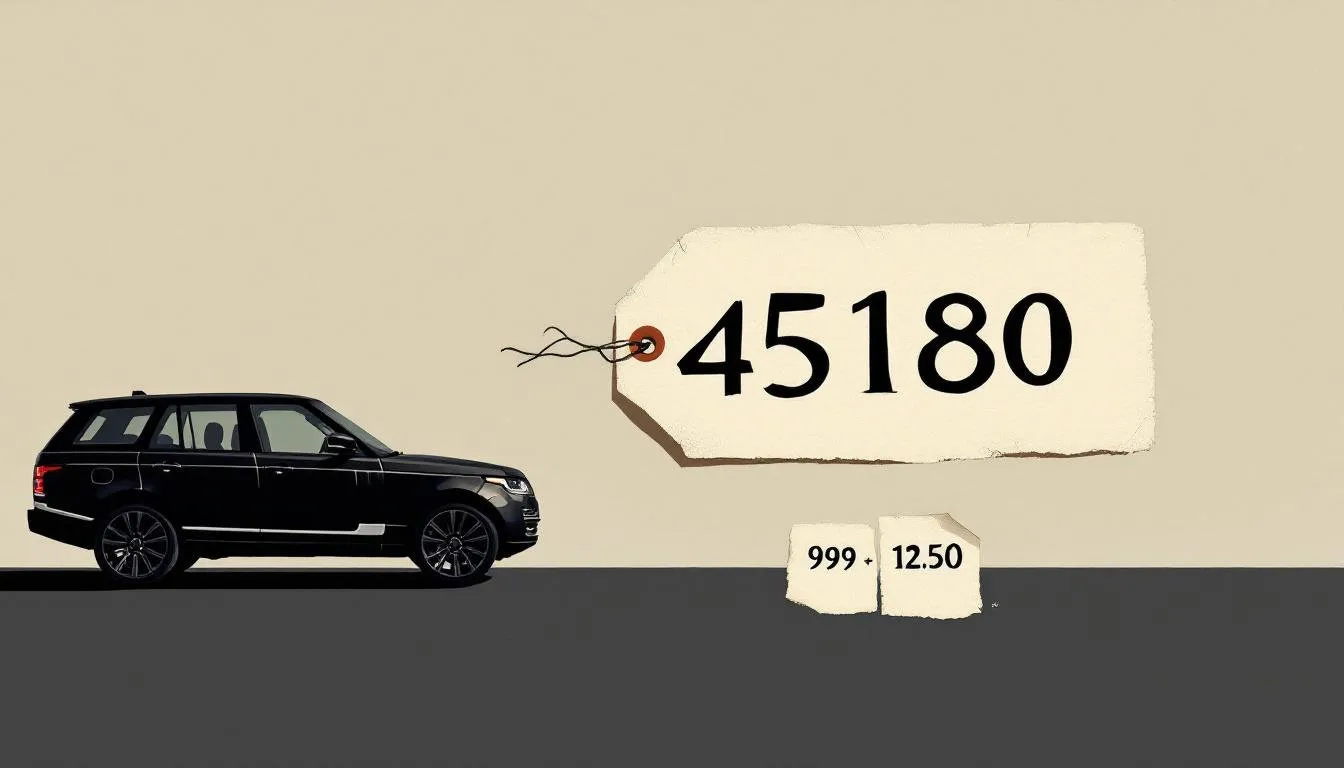
OMVIC fined CCC Motors $2,500 on April 2, 2026 after a mystery shop on a 2020 Range Rover found $1,011.50 added above the advertised $45,180.
OMVIC’s Discipline Tribunal fined 1000089080 Ontario Inc. o/a CCC Motors $2,500 on April 2, 2026 after an October 1, 2025 mystery shop on a 2020 Land Rover Range Rover. The salesperson, Gurneet Singh, had been registered for five months. The Person in Charge, Ce Wei, had carried the registration since December 2022 and was also a Director of the corporate dealer. Both individuals must complete the MVDA Key Elements Course within 90 days, and the dealer must offer to fund the same course for every salesperson on its roster.
The transaction is small in dollar terms next to the Bolton Honda or Hully Gully decisions issued on the same April 2 docket. What makes the case worth reading is the supervision angle: a Director-cum-PIC was personally caught by the same Code of Ethics finding as the new salesperson he was responsible for training.
What the mystery shop found
On or before October 1, 2025, the dealer advertised a 2020 Land Rover Range Rover (VIN ending in 581626) at $45,180. An OMVIC representative inquired about the vehicle while posing as a member of the public. Singh, acting for the dealer, handed the representative a written quote titled “Offer to Purchase” that added two charges above the advertised price:
- a $999 Administration fee
- a $12.50 OMVIC fee
The two charges total $1,011.50, so the advertised price was not all-inclusive. s. 36(7) of O. Reg. 333/08 is the rule the case turns on; the s. 4(2) of the Code of Ethics finding follows from it because a dealer that advertises one number and quotes another is not making a representation that is legal, decent, ethical, and truthful.
The textual carve-out in the all-in pricing rule names sales tax (s. 36(10)); OMVIC’s longstanding interpretive practice also accepts licensing shown separately. A $999 dealer-administration fee and a $12.50 OMVIC charge are neither sales tax nor licensing; they belong inside the advertised number.
Three respondents, two different breach lists
The Reviewing Panel made distinct findings for each respondent. The split is a reminder that for all-in-pricing breaches the disclosure-and-marketing rule attaches to whoever held the customer-facing role on the day, while the accountability rule reaches the person responsible for the dealer’s compliance more broadly.
- The Dealer breached s. 4(2) and s. 9(3). The disclosure breach attaches to the dealer entity because the Offer to Purchase was issued in the dealer’s name.
- Ce Wei, the Director and Person in Charge, breached s. 6(2) and s. 9(3). Wei was first registered as a salesperson in December 2022. The Agreed Statement records that as PIC he was “assigned primary responsibility for and agreed to be accountable for compliance with the Act and Regulations thereunder.”
- Gurneet Singh, the floor salesperson, breached s. 6(2) and s. 9(3). Singh was first registered in May 2025 and joined CCC Motors a month later. The breach happened five months into his career as a registered salesperson.
s. 6(2) is the salesperson’s individual duty not to do or omit anything that causes the dealer to contravene the regulation or any applicable law. The same finding hit both the PIC and the new hire under his supervision: Singh issued the non-compliant quote, Wei was the registered salesperson with regulatory accountability for the dealer’s operations, and both ended up on the same line of the order.
The Reviewing Panel was Greg Flude (Public Member), Jon Lemaire (Registrant Member), and Paul Repar (Registrant Member). Flude signed the order on behalf of the other two. The matter proceeded under Rule 1.07 of the Discipline and Appeals Tribunal Rules of Practice with an Agreed Statement of Facts dated February 12, 2026.
Why “it was only a mystery shop” did not work
The panel listed one aggravating factor (one impugned trade with an all-in pricing breach) and two mitigating factors (acceptance of responsibility through the Agreed Statement, and a first appearance before the Tribunal). Then it added a third category labelled “Other Factors”:
The Reviewing Panel does not accept the fact that no consumer was harmed by this interaction as a mitigating factor. It was, as far as the Dealer was concerned on the day, a consumer transaction. The Dealer cannot use the fact that in this instance it was a mystery shop to suggest its breach of the Code of Ethics was somehow less culpable than a sale to actual consumer.
This is the same paragraph the same panel inserted in the Thunder Bay Harley-Davidson decision on the same April 2 docket. The repetition matters: it is no longer a one-off remark. The position is general, the panel has cited it twice in writing, and the 25% increase in mystery shopping reported in OMVIC’s 2025 annual report means more cases will come up the line.
How the panel arrived at the penalty
The $2,500 fine is identical to the Thunder Bay Harley-Davidson penalty on the same April 2 docket: same dollar number, same single-trade fact pattern, same first appearance. It sits below the Hully Gully ($5,500) and Bolton Honda ($6,000) penalties on the same docket. Those cases had aggravating factors that CCC Motors did not: Hully Gully had two impugned trades and a fifteen-month-old OMVIC compliance letter on file, Bolton Honda had falsified documents.
The training pieces are unusual. The dealer’s offer-to-fund obligation here is for the MVDA Key Elements Course, OMVIC’s older remediation program, with a 90-day window. The individual respondents (Wei and Singh) each take the same MVDA Key Elements Course within the same 90 days. That is different from Thunder Bay Harley-Davidson, where the dealer-funded program for the broader salesperson roster was the newer Automotive Certification Course while the named individuals took Key Elements. CCC Motors gets Key Elements all the way down.
What to learn
- The PIC and the new salesperson can end up on the same line. s. 6(2) reaches every registered salesperson who does or omits anything that causes the dealer to contravene the regulation. When the PIC is also a registered salesperson, the same finding can attach to both the supervisor and the supervised person. The corporate dealer was charged with s. 4(2) (disclosure) and s. 9(3) (professionalism); the s. 6(2) accountability piece travelled with the individuals.
- The mystery-shop paragraph is now boilerplate. The same panel used identical language in Thunder Bay Harley-Davidson on the same docket. Expect to see it again. Sentencing positions itself around what a dealer’s day-to-day practice looks like, not whether the buyer who walked in turned out to be an inspector.
- Document fees and the OMVIC charge belong inside the advertised price. A $999 administration fee plus a $12.50 OMVIC fee is the same compliance error as a $395 admin fee plus $12.50 PPSA on a Harley-Davidson (compare Thunder Bay Harley-Davidson). The size of the fee does not change the rule. The only items the regulation lets a dealer show separately are sales tax (under s. 36(10) of the same rule) and, as a matter of OMVIC’s interpretive practice, licensing.