 DealerPrep.ca
OMVIC discipline case ·
OMVIC fines Aurora Chrysler $3,000 after its own inspection centre certified a Nissan Frontier the MTO later declared unfit
OMVIC fined Aurora Chrysler $3,000 on April 13, 2026 after its inspection centre issued a safety certificate for a Nissan Frontier the MTO declared unfit.
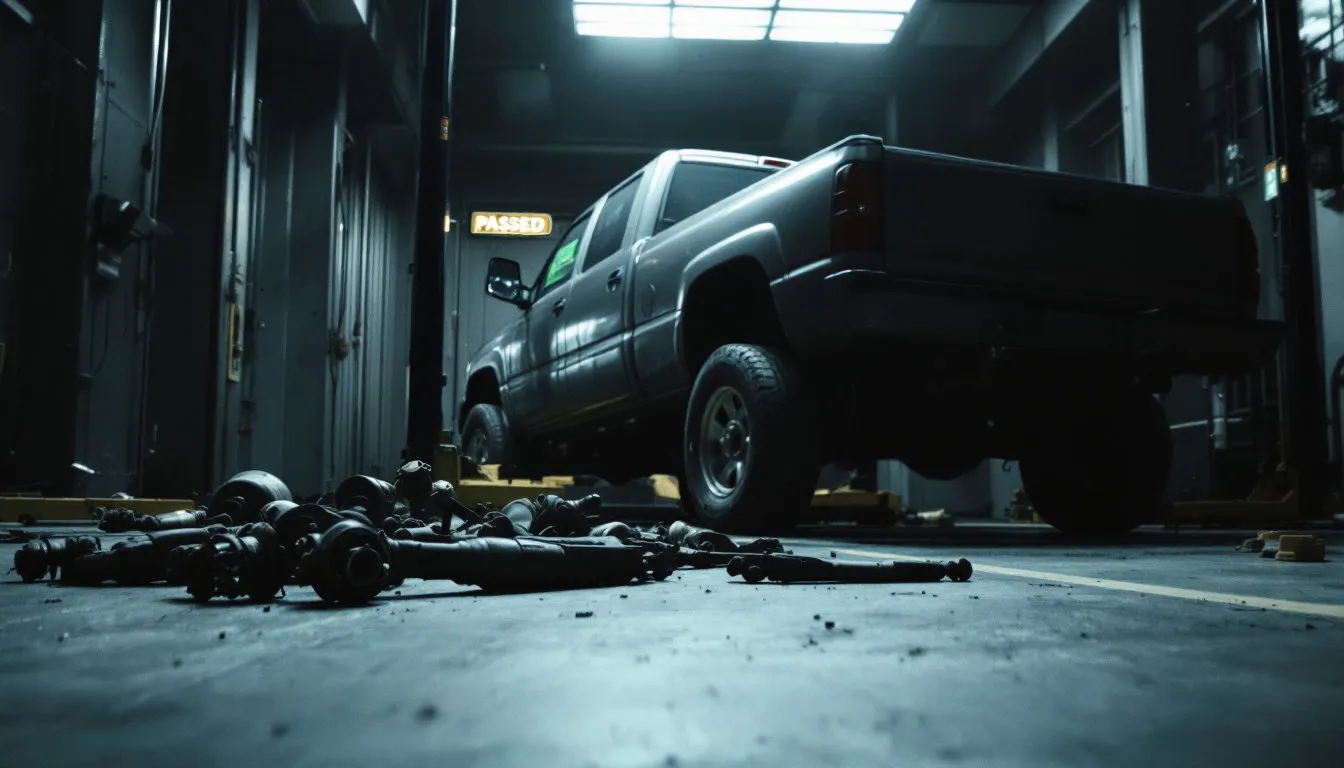
OMVIC’s Discipline Tribunal fined Chevalier Chrysler Inc. o/a Aurora Chrysler $3,000 on April 13, 2026 over a used truck that failed a safety inspection, passed a second one at the dealer’s own inspection centre four days later without the defects being fixed, and ended up stripped of its plates by the Ministry of Transportation three months after the sale. General Manager and Person in Charge Hung-Cheong Frank Chan must complete the MVDA Key Elements Course with a passing grade of at least 80% within 90 days, and the dealership must offer to fund the Automotive Certification Course for every salesperson it employs.
This is the first safety-certificate case in the compliance collection. The fact pattern is different from the advertising and disclosure cases that dominate OMVIC’s discipline dockets: here the document at the centre of the trade, the safety standards certificate, said something about the vehicle that was not true.
A fail on March 14, a pass on March 18
Aurora Chrysler, a registered dealer since September 1992, bought a 2016 Nissan Frontier on March 12, 2025. Two days later it sent the truck for a safety standards inspection. The truck failed.
On March 18, 2025, the vehicle passed a second inspection and a safety standards certificate was issued. The inspection was done by the dealer’s own vehicle inspection centre, located at the same 14535 Yonge Street address as the dealership. The Agreed Statement of Facts is blunt about what happened in between: the condition issues identified on March 14 “were not addressed” before the March 18 certificate was issued.
On March 22, 2025, the dealer sold the Frontier to a consumer, handed over a copy of the certificate, and represented that the truck had passed a safety inspection.
DriveON, the MTO, and the plates
The consumer started having problems with the truck within a month. A third-party facility inspected it on April 29, 2025, found several condition issues, and said the vehicle should not have passed its safety inspection. The consumer complained to DriveON, the province’s vehicle inspection program, which triggered an investigation by DriveON and the Ministry of Transportation.
On June 25, 2025, the MTO inspected the Frontier, determined it was unfit, and removed its licence plates. On July 3, the consumer learned that about $13,797.30 in repairs would be needed for the truck to qualify for a safety certification. The consumer asked the dealer to buy the truck back or cover the repair cost. The dealer refused, insisting the vehicle had passed a safety inspection and was sold as equipped with no warranty.
The consumer complained to the Registrar on July 15, 2025. After OMVIC requested records, the dealer produced the March 18 inspection report and its reconditioning records, which is how the gap between the failed inspection and the certificate came into the open. On September 29, 2025, the dealer repurchased the vehicle and refunded the consumer.
The findings
The panel found the dealer breached four sections of the Code of Ethics:
- s. 7(1), which requires that all documents used in a trade are “current and comply with the law”. A safety certificate issued without the underlying repairs is exactly the document this rule exists to catch.
- s. 9(1), the professionalism rule against conduct unbecoming of a registrant.
- s. 9(3), the requirement to prevent error, misrepresentation, fraud or unethical practice in a trade.
- s. 9(4), which demands conscientious service and “reasonable knowledge, skill, judgment and competence”.
The Agreed Statement of Facts also records two breaches outside the Code. The dealer failed to disclose the existing condition issues on the bill of sale, contrary to paragraph 25 of s. 42 of O. Reg. 333/08, the catch-all that requires disclosure of any fact that could reasonably be expected to influence a buyer’s decision. And it failed to deliver a vehicle fit for its intended use, contrary to s. 15 of the Sale of Goods Act, the implied-condition rule that consumer-protection lawyers reach for when a dealer says “as equipped, no warranty”. The order does not analyse the disclaimer; it simply records the breach. The dealer’s “sold as equipped, with no warranty” position appears in the facts, and the s. 15 finding appears two paragraphs later.
Chan, registered as a salesperson since January 1983 and the Person in Charge of day-to-day operations at all material times, picked up personal findings under s. 6(2) and s. 9(3) for failing to ensure the dealership operated in compliance with the Act and its regulations.
The buy-back as mitigation
The Reviewing Panel (Sherry Darvish, public member, signing on behalf of registrant members Joe Malfara and Mike Ball) accepted the joint submission. The September buy-back and refund weighed as a mitigating factor, alongside the settlement itself and the respondents’ acceptance of responsibility. The matter proceeded in writing under Rule 1.07 of the Tribunal’s Rules of Practice, on an Agreed Statement of Facts dated March 2, 2026.
It took six months and a Registrar complaint to get there. The consumer asked for the same remedy on July 3 and was refused. The refund the dealer eventually paid is the one the consumer had requested at the start, before DriveON, the MTO, and the Registrar got involved.
What to learn
- A safety standards certificate is a representation, not a formality. Issuing one through your own inspection centre while the failed-inspection defects sit unrepaired breaches s. 7(1) and can end with the MTO pulling the plates off a customer’s vehicle.
- “As equipped, no warranty” does not erase the implied condition of fitness under s. 15 of the Sale of Goods Act, and it does not excuse the bill-of-sale disclosure of known condition issues required by s. 42 of O. Reg. 333/08.
- A buy-back offered six months late still counts as mitigation, but the fine, the education orders, and the discipline record all exist because it was six months late. The cheapest moment to fix a bad sale is when the customer first asks.