
 DealerPrep.ca
Licence Appeal Tribunal ·
LAT confirms refusal of Fine Auto Sales registration after Consumer Proposal and HST breach
A 2024 Consumer Proposal and unpaid CRA HST breached Khalid Chaudry's 2012 Consent Order. The Ontario LAT confirmed OMVIC's refusal to register Fine Auto Sales.
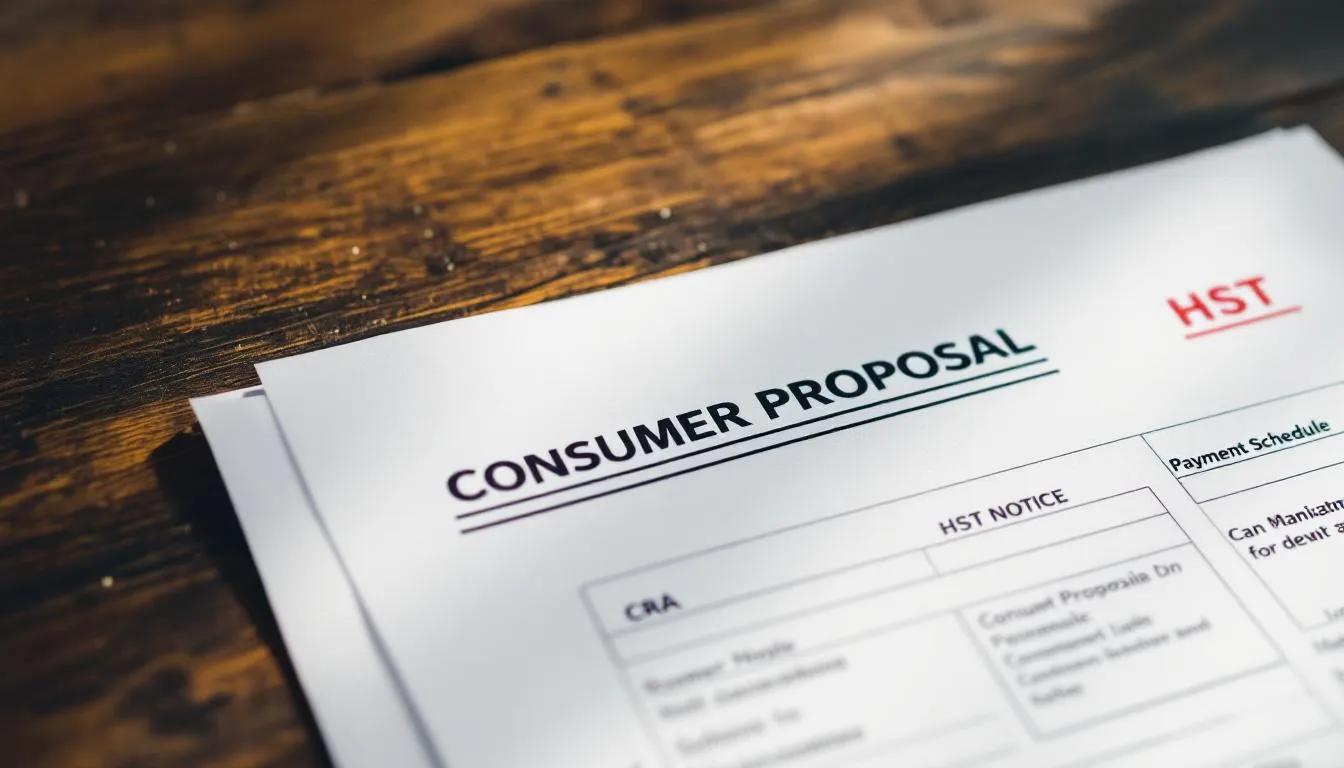
On May 14, 2026, the Ontario Licence Appeal Tribunal confirmed OMVIC’s refusal to register Khalid Chaudry, who carries on a sole proprietorship as Fine Auto Sales. Vice-Chair Kevin Kovalchuk found that Mr. Chaudry could not reasonably be expected to be financially responsible in the conduct of his business and that he had breached a condition of a 2012 Consent Order requiring him to keep his tax filings current. The Tribunal declined to substitute conditions under s. 9(5) of the MVDA. The decision is published on CanLII as 2026 CanLII 45562 (ON LAT).
The case is a direct counterpart to Jandu and Used Car Depot, where the same s. 9(5) discretion produced the opposite result. Both decisions turn on financial responsibility and breach of a prior condition; the result split on prior compliance history and whether the Tribunal believed new conditions would hold.
How the case got to the Tribunal
OMVIC issued a Notice of Proposal to revoke Mr. Chaudry’s registration on November 9, 2025. By the time of the hearing his registration had already expired on January 20, 2026 and he had filed a fresh application on March 19, 2026. OMVIC served a Notice of Further and Other Particulars on March 30, 2026, extending the same grounds to the renewal application. The hearing proceeded by videoconference on March 31, 2026 and the decision issued on May 14, 2026.
Two statutory grounds were in issue:
- Section 6(1)(a)(i) of the MVDA, which disentitles a non-corporate applicant from registration when, having regard to the applicant’s financial position, the applicant cannot reasonably be expected to be financially responsible in the conduct of business.
- Section 6(1)(f), which disentitles an applicant who is in breach of a condition of the registration.
OMVIC’s only witness was Shelly Webb, the Registration Services Manager. Mr. Chaudry, who has been a dealer for 18 years, represented himself.
What OMVIC proved
A Consumer Proposal showing $130,943 in unsecured debt
On August 20, 2024, Mr. Chaudry filed a Consumer Proposal under the federal Bankruptcy and Insolvency Act. The Trustee’s report identified $130,943 in unsecured debt and proposed payment of $27,000 at $450 per month over 60 months, with completion scheduled for October 2029. The payout works out to roughly 14 cents on the dollar after the Administrator’s fees. The Trustee found the causes of insolvency to be financial mismanagement and business losses driven by COVID-19.
Three of the creditors were the Canada Revenue Agency, two for outstanding HST accounts. At least two further creditors were cheque cashing establishments.
Ms. Webb’s evidence was that a Consumer Proposal carries direct consequences for OMVIC’s two statutory concerns. The first is consumer protection: if a buyer obtained a court order against the dealer for a refund, the order would be held in abeyance until the proposal completed in 2029. The second is exposure to the Motor Vehicle Dealers Compensation Fund: a buyer who could not collect from the dealer could instead seek payment from the Fund. Because Mr. Chaudry trades as a sole proprietor, the dealer and the individual are the same person, and the financial pressure flows straight through to the business.
Breach of the 2012 Consent Order
In 2012 the Tribunal had previously imposed a Consent Order on Mr. Chaudry. Condition 29 of that Order required him to comply with all federal, provincial and municipal tax obligations and to keep all required filings current and submitted with required payments. The two outstanding HST debts disclosed in the Consumer Proposal showed that he had not.
That admitted breach was enough to disentitle him under s. 6(1)(f). The Tribunal also treated it as evidence going to financial responsibility under s. 6(1)(a)(i): a registrant who could not keep HST current under a written condition is not financially responsible at the threshold the Act requires.
The cross-examination admissions
On cross, Mr. Chaudry agreed to a number of facts that closed off most of his defence:
- His business “is not in good financial shape”.
- The proposal showed $130,000 of debt and some of it was owed to CRA for HST.
- Financial mismanagement was one of the reasons for the proposal.
- The payment plan continues to October 2029.
- He is a sole proprietor and his financial position puts consumers at risk if they bring a legal claim.
- He was aware his prior registration required him to pay all debts when due, and the proposal itself was evidence he had not.
Mr. Chaudry’s affirmative case was that he had been a dealer for 18 years without complaint, that he is still making the proposal payments on time (a Trustee letter dated April 4, 2025 confirmed good standing), and that selling cars on an “as is” basis without safety certification reduced his exposure to consumer complaints. On cross he conceded that “as is” sales can still draw complaints. The Tribunal placed little weight on the “as is” argument.
Why the Tribunal refused conditions
Section 9(5) of the MVDA gives the Tribunal three options: confirm the Registrar’s proposal, substitute its own opinion, or attach conditions. OMVIC opposed substituting conditions on the ground that Mr. Chaudry had already broken one set of consent conditions under the 2012 Order and there was no reason to believe a new set would hold. Mr. Chaudry made no submissions on conditions.
The Vice-Chair agreed with OMVIC. The 2012 breach showed both that the financial precarity is real and ongoing and that conditions are not an effective regulatory tool for this registrant. Imposing them again would not resolve the consumer protection concern that consumer judgments against Mr. Chaudry could not be collected until the Consumer Proposal completes.
The Tribunal directed the Registrar to carry out the Notice of Proposal and refused registration.
The comparison with Jandu is direct. In that case the dealer was 30 years registered with no prior consumer complaints, had refunded affected consumers, had a CRA repayment plan in place, and the warranty company had paid out the consumer claims. The Tribunal substituted conditions. Here the dealer was 18 years registered, was already subject to conditions from a prior LAT order, and had breached one of those conditions on the most basic financial obligation a dealer has. The conditions track did not survive that history.
What to learn
- HST is not the dealer’s money. Section 6(1)(a)(i) treats financial responsibility as an independent ground for refusal. Unremitted HST owed to CRA is collected from the consumer and held in trust for the Crown; falling far enough behind to require a Consumer Proposal is the kind of fact the Tribunal will treat as decisive at the registration stage.
- Breach of an existing condition narrows the options. Section 9(5) gives the Tribunal three options. A prior breach makes the conditions option much harder to win. If you have a Consent Order on your file, the conditions in it are the floor on what new conditions could ever look like, and breaking them tells the next adjudicator that more conditions are not the answer.
- A sole proprietorship offers no separation. The Tribunal accepted Ms. Webb’s evidence that a sole proprietor’s personal finances are the dealership’s finances. Trading as a corporation does not erase a financial-responsibility analysis (interested-person rules in s. 6(4) reach into officers and directors), but it does prevent the automatic collapse of personal and business solvency that drove the analysis here.